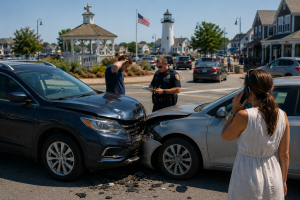
 Every summer, Cape Cod fills up with people from all over the country. Hyannis becomes one of the busiest spots on the peninsula, with visitors heading to the ferry terminals, the marina, Main Street, and the beaches. For locals and year-round residents, this seasonal surge is just part of life here. But it also means the roads get more dangerous, and a lot of the people behind the wheel have no idea how to navigate a rotary, where Route 132 backs up, or why you simply cannot rush through the intersection at Iyannough Road during peak season.
If you were hurt in a car accident caused by an out-of-state driver, you probably have questions that go beyond the basics. Working with a personal injury lawyer in Hyannis who understands how these cases actually unfold is important, because they play out differently than crashes between two local drivers.
The Out-of-State Driver Problem
One of the first concerns people have after a crash with a tourist is simple: what happens if they go home before anything gets resolved? The good news is that Massachusetts has legal tools to address this. Under the state’s long-arm statute, courts can assert jurisdiction over out-of-state defendants who caused harm here, even if they have since returned to Florida, New York, or wherever they came from.
That said, the practical reality is that pursuing an out-of-state driver can take longer and require more coordination. Your Hyannis personal injury attorney will typically deal with the at-fault driver’s insurance carrier directly, which is often where the real work happens. Insurance companies are the ones cutting settlement checks, not the individual drivers.
Massachusetts Is a No-Fault State, But That Has Limits
Massachusetts follows a no-fault insurance system for car accidents. This means that after a crash, your own Personal Injury Protection (PIP) coverage kicks in first to pay for your medical bills and a portion of your lost wages, regardless of who was at fault. Every driver in Massachusetts is required to carry at least $8,000 in PIP coverage.
Here is where it gets important: if your injuries meet what is called the “serious injury threshold,” you can step outside the no-fault system and file a claim directly against the at-fault driver. In Massachusetts, this threshold is met when your reasonable medical expenses exceed $2,000, or when you suffer a fracture, loss of a body part, permanent or serious disfigurement, loss of sight or hearing, or death. Many accident victims do meet this threshold, which opens the door to recovering pain and suffering damages.
A personal injury lawyer in Hyannis can evaluate whether your injuries qualify and help you pursue the at-fault driver’s liability insurance for those additional damages.
Summer Traffic Patterns That Create Specific Hazards
The Bourne rotary has historically been one of the most crash-prone spots on the Cape, with hundreds of accidents recorded over a five-year stretch according to Cape Cod Commission data. Visitors unfamiliar with rotary etiquette cause a disproportionate number of those crashes. The same goes for the area around the Hyannis ferry terminals on Ocean Street, where seasonal congestion and driver confusion are a genuine problem.
Other common trouble spots during tourist season include:
- Route 132 near the Cape Cod Mall, where drivers unfamiliar with the layout make last-second lane changes
- Main Street in Hyannis, where pedestrian traffic is heavy and parking maneuvers create sudden hazards
- Route 6 eastbound on Friday afternoons, when traffic is at its worst and driver frustration leads to aggressive behavior
If your accident happened in one of these areas, an experienced Hyannis personal injury attorney will know what surveillance cameras, traffic data, or witness sources may be available to help document what happened.
Documenting the Scene When the Other Driver Is from Out of State
Standard accident advice applies here, but with a few extra details worth keeping in mind. Beyond the usual steps of calling 911, seeking medical attention, and exchanging insurance information, make sure you photograph the other driver’s license and the vehicle’s license plate. Out-of-state plates can sometimes be harder to trace after the fact.
Also take note of where the driver was staying if possible. A rental car is another thing to flag, because rental companies can sometimes be brought into liability claims under certain circumstances, though federal law has limited this compared to what was possible years ago.
Save all communications, including any texts or statements the other driver made at the scene. People sometimes say things in the immediate aftermath of a crash that are highly relevant to establishing fault.
What Your Claim Might Actually Look Like
Most personal injury cases in Massachusetts settle without going to trial. Your Hyannis personal injury attorney will send a demand letter to the at-fault driver’s insurance company after your medical treatment has progressed enough to understand the full extent of your injuries. Settling too early is a common mistake, because some injuries take weeks or months to fully reveal themselves.
If the insurance company disputes liability or offers an unreasonably low settlement, your attorney can file suit. At that point, the out-of-state element becomes relevant again, but with proper legal representation it is manageable.
The statute of limitations for personal injury claims in Massachusetts is three years from the date of the accident. That sounds like a long time, but evidence fades, witnesses become harder to locate, and building a strong case takes preparation. Reaching out to a personal injury lawyer in Hyannis sooner rather than later gives your case the best foundation.
You Should Not Have to Figure This Out on Your Own
Cape Cod is a place people come to relax, but that does not always mean they drive responsibly. If someone’s carelessness behind the wheel left you injured during what should have been an ordinary summer day, you have the right to seek full compensation for what you have been through. A Hyannis personal injury attorney can walk you through your options at no cost during an initial consultation, and most personal injury cases are handled on a contingency fee basis, meaning you pay nothing unless your lawyer wins your case.