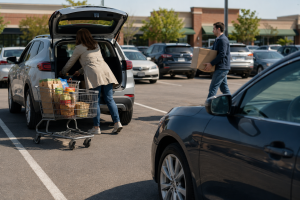
 Parking lots are where a surprising number of accidents happen, and they are also where some of the biggest misconceptions about personal injury claims exist. People get backed into while loading groceries at the Market Basket on Dartmouth Street. Cars collide at the exit of a busy summer festival parking area. Someone gets hit by a reversing vehicle in a crowded waterfront lot on a Saturday afternoon. And then almost everyone involved makes the same mistake: they assume that because it happened in a parking lot at low speed, it is a minor situation that does not involve lawyers or formal claims.
That assumption leads to real problems. As a personal injury lawyer in New Bedford, I see the consequences of it regularly. Here is what you actually need to know about parking lot accidents.
Myth One: Parking Lot Accidents Are Always 50/50 Fault
This is probably the most widespread misconception about parking lot crashes. The idea that both drivers are always equally at fault is simply not true. Fault in a parking lot accident is determined the same way fault is determined anywhere else: by looking at who had the right of way, who violated a traffic rule, whose negligence caused the collision, and what the evidence shows.
In parking lots, there are general rules that determine right of way. Drivers in the main lanes of a parking lot generally have the right of way over drivers in the smaller access lanes between rows of spaces. A driver backing out of a parking space is required to yield to vehicles already in the lane. Drivers who ignore stop signs at parking lot exits or who exceed reasonable speeds for the environment can be found primarily at fault regardless of where the collision happened.
If the other driver backed into you, failed to yield when pulling out, or was speeding through the lot, they may bear most or all of the fault. A New Bedford personal injury attorney can help you build the evidence to establish that.
Myth Two: Low Speed Means Minor Injury
Parking lot accidents often happen at what feels like low speed, but low speed does not prevent real injury. Pedestrians struck in parking lots, even by slow-moving vehicles, can suffer broken bones, knee injuries, and serious soft tissue damage. Being hit while loading a trunk, while pushing a shopping cart, or while walking to your car creates impacts at angles and to body parts that are not protected by a seatbelt or a vehicle frame.
Summer shopping trips, waterfront lot foot traffic, and the general bustle around New Bedford’s commercial areas mean more pedestrians moving through parking lots at the same time as vehicles. That combination is a recipe for accidents that, despite happening at parking lot speeds, result in genuine injuries that deserve full compensation.
Myth Three: You Can Just Handle It Informally
One of the most common things people do after a low-speed parking lot collision is exchange phone numbers with the other driver and agree to “work it out” without getting insurance involved. This almost never works out well for the person who was hurt.
A few days later, the other driver stops answering your calls. Or they contact their insurance company and tell a version of events that is different from yours. Or you discover that your injuries are more significant than they seemed at the scene. By then, you have no police report, possibly no photos of the scene, and no formal record that the accident happened the way you described it.
Calling the police to document even a low-speed parking lot accident creates a record that protects you. Even if the police decline to come for a minor fender-bender, file an accident report yourself at your local police department. Then contact a personal injury lawyer in New Bedford before settling on what to do next.
Fault Can Also Rest With the Property Owner
Here is an angle that almost nobody considers after a parking lot accident: the property owner or manager of the lot itself may bear some responsibility. Poorly marked lanes, confusing or missing signage, inadequate lighting in evening hours, faded or missing stop markings at lot exits, and poorly designed traffic flow can all contribute to accidents. If the conditions of the parking lot contributed to what happened, the owner or operator of that lot may be an additional source of liability.
Summer brings higher traffic to certain New Bedford commercial areas, waterfront venues, and event spaces, and parking lots that are manageable at lower volumes become chaotic at peak times. When property owners fail to add staff, improve signage, or manage traffic flow during predictably busy periods, and accidents result, that is a failure of their duty of care to the people using their property.
What to Do Right After a Parking Lot Accident
- Do not move your vehicle until you have documented the scene with photos
- Get the other driver’s name, address, phone number, license number, and insurance information
- Look for witnesses and get their contact information before they leave
- Note the location, lane configuration, and any relevant signage or markings in your photos
- Check for nearby security cameras on the building or in the lot
- Seek medical attention even if your injuries seem minor, and go sooner rather than later if symptoms develop
- Report the accident to your insurance company but speak with a lawyer before giving detailed statements
Parking lot accidents feel smaller than they are, and that feeling leads people to underprotect themselves in the aftermath. Whether you were in a vehicle or on foot when it happened, if you were hurt in a parking lot through someone else’s negligence, you deserve the same consideration as any other personal injury victim.
Contact a personal injury lawyer in New Bedford for a free consultation. There is no minimum severity requirement for getting legal advice, and the conversation itself will help you understand exactly what your options are before you make any decisions.