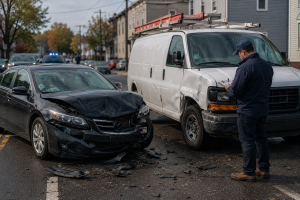
 A large portion of vehicles on Fall River’s roads at any given moment are being driven by people who are working. Delivery drivers, service technicians, sales representatives, construction crews, healthcare workers making home visits, Amazon drivers, and countless other employees are behind the wheel as part of their jobs every single day. When one of those workers causes an accident that injures you, your personal injury claim isn’t just against the individual driver. In most cases, it reaches directly into the employer’s insurance coverage, which can be substantially larger than what any individual carries on a personal auto policy.
This concept is called vicarious liability, and understanding how it works in Massachusetts can significantly change what your case is actually worth.
What Vicarious Liability Means in Plain Language
Under Massachusetts law, an employer can be held legally responsible for the negligent acts of their employees when those acts occur within the scope of employment. The legal doctrine behind this is called respondeat superior, which essentially means the employer answers for what the employee does on the job.
The practical effect is that when a delivery driver runs a red light and hits your car while on a route, you have a claim not just against the driver personally but against the company that employed them and directed their work. That company almost certainly carries commercial automobile liability insurance with limits far exceeding the $25,000 minimum that a personal auto policy now requires in Massachusetts. Commercial policies commonly carry limits in the hundreds of thousands or millions of dollars, which matters a great deal when serious injuries are involved.
What “Scope of Employment” Actually Means
Not every accident involving an employee happens on the clock in a way that triggers employer liability. Courts look at whether the employee was performing tasks for the employer’s benefit, whether they were where the employer expected them to be, and whether the conduct was the kind of thing the employer authorized.
A plumber driving from one job site to another in a company van is clearly within the scope of employment. A retail employee running a personal errand during their lunch break in their own car probably isn’t. But the boundaries aren’t always obvious. An employee who makes a brief personal detour during an otherwise work-related trip may still be within the scope in some circumstances. A worker traveling to their first job assignment of the day may be covered under certain interpretations of Massachusetts law.
These questions require careful legal analysis of the specific facts, which is exactly what a Fall River personal injury attorney does in the early phase of a case. Getting the scope-of-employment analysis right determines whether you’re dealing with a personal auto policy or a commercial one, and that can mean the difference between a claim that covers your actual losses and one that falls short.
Negligent Hiring and Negligent Entrustment
Beyond vicarious liability for the employee’s negligence, employers can face their own independent negligence claims. If a company knew or should have known that a driver had a history of serious traffic violations, prior accidents, or substance abuse issues, and hired or retained them anyway, that company may be independently liable for negligent hiring. If a company entrusted a company vehicle to a driver it had reason to believe was unqualified or reckless, negligent entrustment claims may apply.
These independent employer liability theories are separate from the respondeat superior doctrine, and they expand the potential scope of the employer’s exposure even in situations where the strict scope-of-employment question might be contested.
Commercial Vehicles and Federal Regulations
If the vehicle that hit you was a large commercial truck, a bus, or any vehicle subject to Federal Motor Carrier Safety Administration regulations, an additional layer of potential liability and evidence opens up. FMCSA regulations govern how many hours a commercial driver can operate without rest, how vehicles must be maintained, what records must be kept, and how companies must supervise their drivers.
When a trucking company or other commercial carrier violates those regulations, those violations are evidence of negligence. Driver log books, electronic logging device data, vehicle maintenance records, and company safety compliance histories are all potentially discoverable in litigation. A Fall River personal injury attorney handling a commercial vehicle case will know which records to demand and how to use them.
Delivery Driver Accidents Are a Growing Category
The expansion of e-commerce and food delivery has put a significant new class of drivers on Fall River roads: gig economy delivery workers for companies like Amazon, DoorDash, Uber Eats, and others. The insurance coverage picture for these drivers is complicated by the same platform-versus-employee classification issues that affect rideshare drivers. Whether the delivery platform’s commercial insurance applies, and when, depends on the driver’s status at the time of the crash.
This is an area where the law is still developing and where having an attorney who stays current on platform company insurance structures is genuinely valuable. The companies have incentives to minimize their coverage obligations, and untangling the right answer requires legal analysis specific to each platform’s policies and Massachusetts law.
Do Not Settle Before Exploring All Liable Parties
One of the most costly mistakes in work-related accident cases is settling a claim against only the individual driver before identifying the employer’s liability and the commercial insurance available. Once you’ve settled and signed a release, your claim is over. Discovering afterward that the driver was on the clock and a commercial policy was available doesn’t reopen anything.
A personal injury lawyer in Fall River will ask about the employment status and circumstances of every driver involved in your accident from the very beginning of the case. That question is standard procedure, and the answer shapes the entire claims strategy. Free consultation, contingency fee, no upfront cost. If you were hurt by someone who was working at the time, make sure your claim reflects the full picture of who is responsible.