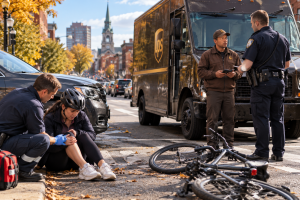
 The moment the calendar hits October in Worcester, the delivery vehicles multiply. UPS and FedEx routes that were already busy get more so. Amazon delivery vans appear on residential streets in numbers that feel almost impossible to count. The holiday shopping season’s logistics machine kicks into gear months before December, and the vehicles carrying that machine’s output move through Worcester neighborhoods, downtown streets, and commercial corridors at a pace and volume that creates real risk for every other road user.
Delivery drivers working for these companies are under pressure in ways that most people do not fully appreciate. Route quotas require completing a set number of deliveries per hour. GPS routing does not always account for safe parking or turning conditions. Drivers are frequently in areas they do not know well, navigating unfamiliar streets while also locating specific addresses, managing packages, and staying on schedule. That combination of time pressure, unfamiliar territory, and divided attention is exactly the formula for traffic accidents.
When a delivery vehicle hits you, your bicycle, or your car in Worcester, the legal landscape is considerably more complex than a standard two-car accident. And the complexity, if navigated correctly, often works in your favor.
Who Is Actually Liable: The Company or the Driver?
This is the first and most important question in any delivery vehicle accident case, and the answer depends heavily on the specific relationship between the delivery company and the driver involved. The answer is not always obvious, and major carriers have been deliberately strategic about structuring those relationships in ways designed to limit their exposure.
UPS and FedEx drivers on their core routes are typically employees of those companies. When an employee causes an accident while acting within the scope of their employment, the employer is liable under the legal doctrine of respondeat superior. This is straightforward and means the deep pockets of a major corporation, and its commercial liability insurance, stand behind the damage that driver’s negligence caused.
Amazon’s delivery network is more complicated. Amazon has built much of its last-mile delivery operation through a network of independently contracted Delivery Service Partners, smaller companies that technically employ the drivers and operate the vans. Amazon has argued in litigation that this structure distances the company from liability for driver accidents. Courts have increasingly pushed back on this argument, particularly when Amazon’s own systems, including routing apps, delivery quotas, and monitoring technology, exercise significant control over how those drivers operate. The legal landscape around Amazon delivery accident liability is still developing, but injured parties in Massachusetts have successfully pursued recovery from Amazon in recent cases.
The Commercial Insurance Angle
One of the most significant differences between a delivery vehicle accident and a standard car accident is the insurance coverage available. Commercial vehicle policies typically carry liability limits that are substantially higher than personal auto policies. A small private delivery contractor may carry $1 million or more in commercial liability coverage. Larger carriers maintain even more significant coverage. When serious injuries are involved, this means the financial resources to compensate a victim adequately are more likely to exist than in a typical accident between private individuals.
Accessing those resources requires establishing the liability clearly and presenting the full scope of the victim’s damages convincingly. A personal injury lawyer in Worcester who has handled commercial vehicle accident cases knows how to build that case and how to deal with the sophisticated legal teams that large delivery companies retain to defend these claims.
Double Parking, Blocked Sightlines, and the Hazards Delivery Vehicles Create
A delivery vehicle accident does not have to involve a direct collision between the van and you to give rise to a personal injury claim. Delivery vehicles that park illegally on Worcester streets, blocking traffic lanes and forcing other vehicles to merge suddenly, create accident conditions. A delivery van blocking a cyclist’s view of oncoming traffic at an intersection is a contributing cause if a crash results. A driver who exits their vehicle and opens a door into a cyclist’s path without looking is liable for the resulting injury.
In dense commercial areas of Worcester, delivery vehicles routinely create temporary obstruction conditions that generate genuine hazards. When those hazards lead to accidents, the delivery company and driver can bear responsibility for the consequences even if the immediate impact involves a different vehicle.
Documenting a Delivery Vehicle Accident in Worcester
Photograph the delivery vehicle clearly, including the company name, vehicle identification number if visible, and any logos or route markings. Note the time and location precisely. This information is critical for tracing the vehicle to the specific driver, the route, and the employer or contractor responsible.
Request the police report and make sure it accurately reflects the circumstances of the accident, including the delivery vehicle’s role. Many delivery vehicles are equipped with cameras, GPS tracking, and route monitoring software that can provide valuable evidence about the driver’s behavior immediately before the crash. This data must be preserved quickly through a formal legal request before it is overwritten or deleted.
Contact a personal injury lawyer in Worcester as soon as possible after a delivery vehicle accident. The companies involved have experienced legal and claims management teams that move quickly after accidents. Having an attorney from the beginning ensures you are not at a disadvantage when those teams start working to minimize the company’s exposure.
The holiday shipping surge is here in Worcester. More delivery vehicles means more risk. If one of them has already put you in a difficult situation, you deserve to know exactly what your legal options look like.