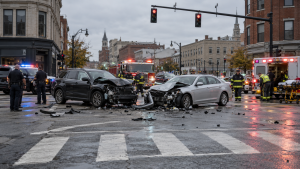
 No one is proud of this distinction. The Southeastern Regional Planning and Economic Development District analyzed crash data from 2017 through 2019 across hundreds of intersections in Southeastern Massachusetts. When the rankings came out, Plymouth Avenue at Rodman Street in Fall River came in second on the entire list, with 119 documented crashes and an EPDO index of 82.33. The only intersection that ranked higher was in Swansea, and it was essentially tied on the severity index.
Fall River did not just make the list once. The city had 20 intersections among the top 200 most dangerous in Southeastern Massachusetts. That includes Pleasant Street at Quequechan Street and President Avenue at Elsbree Street, among others. Twenty intersections in a single city on a list that covers dozens of communities across the region. That is not bad luck. That is a structural problem with specific legal implications for anyone who gets hurt at one of these locations.
Why These Intersections Keep Producing Crashes
Fall River’s road network reflects the city’s history more than its current traffic reality. The street grid in many parts of the city was laid out when the textile mills were the dominant economic force and the traffic it needed to accommodate looked nothing like what moves through those same streets today. Intersections that made reasonable sense for the volume and speed of traffic a century ago now funnel significantly more vehicles, moving faster, with more pedestrian activity around them, through geometry that was never designed to handle it safely.
Plymouth Avenue at Rodman Street sits in a commercial area with the kind of traffic mix that makes intersections dangerous: retail destinations drawing pedestrians, vehicles making left turns across traffic, delivery vehicles stopped in ways that reduce sightlines, and drivers moving with the kind of speed that a long commercial corridor encourages even when the intersection ahead requires more caution than that speed allows.
President Avenue, which appears multiple times on Fall River’s dangerous intersection list, runs through one of the city’s busiest corridors. It is the kind of road where the accident that happened last Tuesday is statistically likely to have a predecessor from the Tuesday before that.
The Legal Significance of a Known Dangerous Intersection
When an intersection has been formally identified as one of the most dangerous in a region, through published government data, and crashes continue to happen there without adequate remediation, that documented history becomes legally significant. Massachusetts premises liability and negligence principles can extend to public infrastructure in ways that create potential municipal liability when a governmental entity knew or should have known about a persistent danger and failed to take reasonable corrective action.
Claims against municipalities in Massachusetts require following specific procedures, including the 30-day written notice requirement discussed in other legal contexts. But the foundational element of such a claim, that the dangerous condition was known and documented, is already established at Fall River’s most dangerous intersections. The data exists. The question is whether the city took adequate steps in response to it.
A personal injury lawyer in Fall River will investigate not only the at-fault driver’s conduct but also the physical and design characteristics of the intersection where the crash occurred, the history of prior crashes at that location, any complaints or requests for improvement that were submitted to city or state authorities, and whether signal timing, signage, lane markings, or sightline issues contributed to the conditions that led to your accident.
When the Intersection Itself Is Part of Your Case
Establishing the intersection’s role in an accident does not require proving the city was negligent in a vacuum. It requires showing that specific, correctable conditions at the intersection contributed to the crash, that those conditions were known or should have been known to the responsible authority, and that the failure to address them was part of what made your specific accident foreseeable.
This kind of case requires investigation and documentation that begins as close to the time of the accident as possible. Signal timing records, maintenance logs, prior crash reports at the same intersection, and any requests for improvements from residents or traffic engineers are all potentially relevant and all potentially harder to obtain as time passes.
If you were hurt at one of Fall River’s documented high-crash intersections, do not let anyone tell you it was just bad luck. The data says otherwise. A personal injury lawyer in Fall River can help you build a case that accounts for everything that actually contributed to your injuries, including the road design that has been hurting people at that intersection for years.
What to Do After an Intersection Accident in Fall River
Get police to the scene and make sure the report accurately reflects the intersection’s conditions, signal state at the time of the crash, and any visibility issues you observed. Photograph the intersection from multiple angles, capturing the sightlines available to each driver and any relevant signage or lane marking conditions.
Seek medical attention immediately and contact a personal injury lawyer in Fall River before making any statements to insurance companies. In intersection accidents where road design may be a contributing factor, early legal involvement protects your ability to pursue every available avenue of recovery, not just the most obvious one.