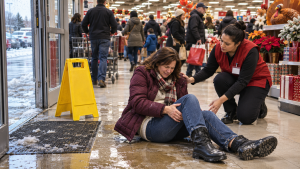
 Thanksgiving weekend is the one stretch of the year when almost everybody ends up inside a store at the same time. Aisles get narrower with extra displays. Staff are stretched thin, and shoppers are carrying bags, boxes and kids. Parking lots fill early. Someone tracks wet snow or slush through the entrance, and a spill sits there longer than it should.
When someone gets hurt in that environment, the legal question usually isn’t “whose fault is the weather?” It’s what the property owner or business did, or didn’t do, about a hazard they could have dealt with. That’s the territory of a Worcester premises liability lawyer.
How busy it really gets
The National Retail Federation reported that a record 202.9 million consumers shopped over Thanksgiving weekend 2025, including 129.5 million who shopped in stores. On Black Friday alone, the NRF said 80.3 million shopped in person and 85.7 million shopped online.
Those are national figures from last year, not a prediction for Worcester this year. Still, they give you a sense of how many people are moving through retail spaces over a few days, and why crowded conditions are normal at this time of year.
What the law expects of property owners
In Papadopoulos v. Target Corp., decided by the Supreme Judicial Court on July 26, 2010, the court held that property owners owe lawful visitors a duty of reasonable care. Although that case concerned snow and ice, the court explained that the same duty applies to snow and ice hazards as to any other hazard on the premises. Under the standard it described, a fact finder weighs the likelihood of injury, the seriousness of the likely harm and the burden of avoiding the risk.
Applied to a busy store, that framework asks practical questions. How foreseeable was the hazard? How long had it been there? What would it have taken to fix it or warn about it? A wet entrance on a day when hundreds of people are tracking in slush is arguably more foreseeable than an unexpected spill in a quiet aisle, though every situation is decided on its own facts.
Common sources of injury claims in stores
Without suggesting any single one is more common than another, these are the kinds of situations that give rise to premises claims:
- Wet or slippery floors near entrances or after spills.
- Merchandise, boxes or carts left in walkways.
- Poorly lit or icy parking lots and walkways.
- Uneven flooring, loose mats or damaged steps.
- Falling items from overstocked shelves.
A Worcester premises liability lawyer will look at how long the condition existed, whether employees knew about it, what the business’s inspection and cleaning practices were, and whether there were warnings.
What to do if you’re hurt in a store
First, get care. If you’re in pain, ask for help and tell staff what happened. Then protect the record:
- Ask for an incident report and keep a copy, or note the name of the manager you spoke with.
- Photograph the hazard before it’s cleaned up: the floor, the spill, the sign (or lack of one), and the surrounding area.
- Write down the time, the exact location in the store, and what you were doing.
- Get names and numbers for anyone who saw it.
- Keep the shoes and clothes you were wearing.
Stores usually have security cameras, but footage is often overwritten after a limited time. That’s why prompt action matters. A lawyer can send a written request to preserve it.
The parking lot counts too
Many falls happen before a person even reaches the door. Lots and walkways may be maintained by the store, by the owner of the plaza, or by a contractor, and the lease or maintenance contract often decides who was supposed to handle what. That’s one of the first things worth finding out, because the business you were visiting isn’t always the one responsible for the pavement outside it.
Seasonal displays and temporary setups
Holiday season brings temporary changes to stores and public spaces: extra displays, stacked merchandise, extension cords, floor mats, queue barriers and decorations. Each of these can create a trip hazard if it isn’t placed carefully. A business is generally expected to take reasonable steps to keep customers safe, which can include noticing and fixing problems like these. If you trip on something that looks like it was set up for the holidays, photograph it and the way it was positioned before anyone moves it, and ask whether the store keeps records of its inspections.
Expect questions about your own care
Insurers for businesses commonly ask whether you were watching where you were going, whether you were on your phone, and what shoes you wore. Under G.L. c. 231, section 85, a plaintiff’s own negligence doesn’t automatically bar recovery in Massachusetts as long as it wasn’t greater than the total negligence of the party being sued, but it does reduce damages by the plaintiff’s share.
That is a good reason to be careful about what you say to an adjuster early on. If you were injured while shopping and want to understand your options, a Worcester premises liability lawyer can review what happened and what evidence to save, before the holiday rush erases it.