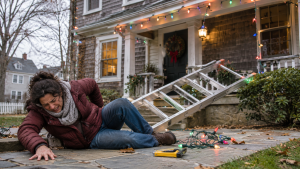
 Marisol has a plan for the weekend. The porch roof needs lights, her cousins arrive on Thursday, and the forecast says rain is coming. She drags a tall aluminum ladder out of the shed, leans it against the gutter and starts up with a staple gun in one hand and a coil of wire in the other. Halfway through the job her weight shifts toward the corner, the feet kick out, and she falls onto the stone walkway. Marisol is made up, but the afternoon is one a New Bedford ladder fall lawyer has heard described many times. The useful way to look at it is as a set of questions that decide what happens next: how common this is, what went wrong, who is responsible, and what to save.
A season of small jobs done in a hurry
The U.S. Consumer Product Safety Commission has put numbers on the problem. A CPSC release on holiday decorating injuries estimated that hospital emergency departments treated about 15,000 injuries tied to decorating across November and December of 2012, and that falls were the most common kind, at 34 percent. Those are nationwide figures from several years ago, so they show the shape of the risk and not a current tally.
The reason is not mysterious. Holiday decorating asks people who rarely climb to do it in cold weather, on a deadline, and often with nobody holding the ladder.
What the ladder was doing when it gave way
The Centers for Disease Control and Prevention publishes a ladder safety page that explains much of Marisol’s fall. It recommends setting an extension ladder at roughly 75 degrees and reports that a wrong angle is behind about 40 percent of ladder injuries, most often because the bottom slides away. It also advises matching the ladder’s size and duty rating to the job, inspecting and maintaining it so it does not fail structurally, and avoiding overreaching, carrying items while climbing and pushing hard against it. The page adds that a good share of these injuries happen at home.
If Marisol’s ladder was set too steeply or too flatly, or if she reached sideways to finish a strand, those are the kinds of facts an insurer will seize on.
Who bears the blame if everyone has a share
The first thing an insurer will ask is what Marisol did wrong. Massachusetts law on shared fault, G.L. c. 231, section 85, says a person found more than half responsible cannot recover anything, while a person with a smaller share recovers a reduced amount. So the percentage is a real fight. Reaching too far or placing the ladder on uneven ground can count against her, but they do not necessarily make her entirely responsible, and other factors can change the split.
Whether the equipment itself failed
Ladders fail in particular ways: a bent side rail, a cracked rung, a locking arm that slips, worn rubber feet, or a flaw in the design. If the ladder was bought new, the maker or the store may face a product liability claim. If it was old or handed down, the situation is harder, though a damaged ladder can still point to who knew about the problem.
Do not return, repair or discard a ladder after a fall. Photograph all sides of it, including any stickers that show the manufacturer and the duty rating, and keep the receipt or box. A New Bedford ladder fall lawyer may want an expert to examine the ladder, so it has to stay exactly as it ended up.
Whether the ground or the building contributed
Marisol fell at her own home, but plenty of people fall while helping someone else. If you were at a relative’s or friend’s place, a business or an event, the condition of the surface and the structure may matter: a rotten step, a loose rail, an icy landing, a hazard left unrepaired. The owner’s responsibility depends on who controlled the area and what they knew.
Photograph the spot where the ladder stood before rain, snow or foot traffic changes it, and capture the slope, the surface and anything loose nearby.
Whether someone lent, rented or installed something
If the ladder was borrowed, the lender could be part of the picture. A rental company may be too, or a contractor who put in hooks, outlets or wiring. Each relationship carries its own questions about what was said, what was promised and what was inspected. Keep texts and messages that mention the ladder.
The hour after the fall
Stay put if you are hurt, and call for help instead of trying to stand. Get examined even if you think you are fine, because falls from a height can injure the head, back, wrists, hips and ribs in ways that take hours to appear. Tell the doctor exactly how you fell and what you hit.
Later the same day, write down the time, the weather, what you were doing and who was nearby. Keep your medical bills and records, stay quiet about it on social media, and if an insurer calls, take time to get advice before giving a statement.
Decorating more safely next time
The CPSC release that gave us the holiday figures also suggests following the warning labels on ladders, using lights tested by a recognized laboratory, throwing out damaged strands, and using outdoor rated lights with ground fault protection when decorating outside.
When to ask for help
If you or a relative was hurt in a ladder fall, a free consultation can sort out whether the equipment, the property or someone else shares responsibility. Bring your records, your photographs and the ladder if you still have it. The sooner you ask, the more of the evidence is still around.