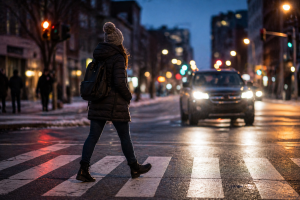
 Pedestrian accidents have been increasing in many communities, and there is no single reason behind it. A lot of factors are contributing at the same time, including distracted driving, heavier traffic, poor roadway design, and drivers failing to yield where they should.
In many cases, these accidents happen in ordinary situations that people deal with every day. Someone is crossing at an intersection. A driver makes a turn without noticing a pedestrian in the crosswalk. A person is walking at night along a poorly lit road. These are common situations, which are part of what makes the problem so concerning.
One major issue is distraction. Drivers today deal with more distractions than ever, from phones and dashboard screens to navigation systems and constant notifications. Even a brief lapse in attention can cause a driver to miss someone crossing the road.
Speed also plays a role. Higher speeds reduce reaction time and make injuries far more severe when a collision occurs. That becomes especially dangerous in neighborhoods, near schools, and in busy downtown areas where pedestrians are common.
Crosswalk Safety Still Depends on Drivers Paying Attention
Many people assume that marked crosswalks automatically provide protection, but that is only true when drivers obey traffic laws and remain alert.
Failure to yield continues to be a major factor in pedestrian crashes. Drivers may rush through turns, roll through stop signs, or focus so much on other vehicles that they fail to see a person crossing.
Some of the most serious pedestrian injuries happen when someone legally has the right of way.
That is what makes many of these collisions preventable.
Crosswalk safety depends not only on pedestrians using designated crossings, but also on drivers recognizing and respecting their responsibility to watch for people on foot.
Night Visibility Creates Additional Risks
Visibility becomes a serious issue after dark.
Poor lighting, weather conditions, glare from headlights, and dark clothing can all make pedestrians harder to see. But limited visibility does not remove responsibility from drivers. In fact, it demands more caution.
Drivers should adjust to conditions, reduce speed, and stay alert in areas where people may be walking.
Many nighttime pedestrian crashes happen not because a pedestrian did something reckless, but because a driver was moving too fast for conditions or simply was not paying close enough attention.
Road Design Can Contribute to the Problem
Some roads are simply not designed well for pedestrians.
Poorly marked crossings, missing sidewalks, long stretches without safe crossing points, and intersections built mainly for vehicle flow can all increase risk.
This often becomes obvious in areas where people have to cross wide roads, navigate busy intersections, or walk near traffic without proper pedestrian infrastructure.
In those environments, mistakes can have serious consequences.
Pedestrian Injuries Can Be Severe
Unlike drivers, pedestrians have very little protection in a collision.
Even relatively low-speed crashes can cause broken bones, traumatic brain injuries, spinal injuries, or long-term disability.
Recovery can involve surgeries, rehabilitation, lost income, and major life disruptions.
That is one reason people injured in these crashes sometimes speak with a Worcester personal injury attorney when another person’s negligence caused the accident.
Serious injuries often raise legal and financial questions that go well beyond the crash itself.
Many Pedestrian Accidents Are Preventable
What makes these accidents especially frustrating is how many could be avoided.
A driver slows before turning.
A motorist yields at a crosswalk.
Someone reduces speed in a pedestrian-heavy area.
Small decisions like these prevent injuries every day.
Improving pedestrian safety does not depend on one solution. It takes better driving habits, safer road design, stronger awareness, and taking pedestrian right-of-way seriously.
Final Thoughts
The rise in pedestrian accidents is tied to a mix of distraction, speeding, visibility issues, and failures to yield. None of those problems should be treated as unavoidable.
Most can be reduced through attention and safer choices.
Drivers have a responsibility to watch for pedestrians, especially at intersections and crosswalks. And pedestrians deserve roads designed with their safety in mind.
When a pedestrian is seriously hurt because a driver acted carelessly, speaking with a Worcester personal injury attorney may help them understand their options.
Pedestrian accidents are increasing, but that does not mean they should be accepted as normal. Many of them should never happen in the first place.