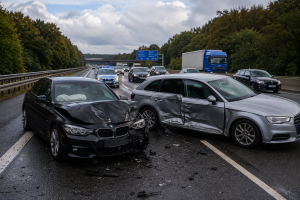
 Being the victim of a hit and run is already one of the more infuriating experiences you can have on the road. Someone hits you, or a pedestrian, or a cyclist, and then just drives away. You’re left standing on the side of the road dealing with the aftermath while whoever caused it is already gone. And then, on top of all that, Massachusetts has a procedural trap built into the law that can permanently cut off your right to compensation if nobody tells you about it within 30 days of the crash.
This isn’t a widely advertised rule. Most people who’ve been in a hit and run don’t find out about it until it’s already too late. A personal injury lawyer in Fall River who handles these cases will know it cold, and getting them involved quickly is genuinely the most important thing you can do after a hit and run crash.
The Written Notice Requirement Under Massachusetts Law
Massachusetts General Laws Chapter 260, Section 4B creates a specific procedure for civil claims when the at-fault driver in an accident is never identified. It’s what allows you to pursue compensation through your own uninsured motorist coverage when you can’t find the person who hit you. But it comes with a condition: you must provide written notice of the accident to both the police and the Registry of Motor Vehicles within 30 days of the crash.
Not a phone call. Not a verbal report at the scene. Written notice. And the people you report it to matter: police and the RMV specifically, not just your insurance company.
What most people do after a hit and run is call 911, file a verbal police report at the scene or at the station, and then report the accident to their insurer. That covers some of the bases. It does not automatically satisfy the written notice requirement under the statute. If the written piece gets skipped, and the driver is never identified, the avenue for civil recovery under that statute is potentially closed.
Why the Driver Being Unidentified Is the Key Issue
If the hit and run driver is eventually tracked down through surveillance footage, a witness who got the plate number, or a police investigation, the situation changes significantly. You can then file a claim directly against their liability insurance, just like any other car accident. The UM coverage process and the written notice rule become less critical once there’s an identified defendant.
But if the driver is never found, your own uninsured motorist coverage is typically the only source of compensation for your injuries. Massachusetts requires all auto insurance policies to carry UM coverage, with minimums of $20,000 per person and $40,000 per accident as of 2025. If you have higher limits, those apply. The written notice requirement is the gate you have to pass through to access those benefits for an unidentified driver.
What Happens if You Weren’t in a Car
The hit and run situation gets more complicated when the victim is a pedestrian or a cyclist rather than someone in a vehicle. If you were on foot or on a bike and were struck by a driver who fled, your own auto insurance policy’s UM coverage may still cover you, because Massachusetts UM coverage generally extends to the policyholder even when they’re not in a vehicle. The same written notice requirement applies.
If you don’t have your own auto insurance, coverage may potentially flow through a household family member’s policy. Working through which policy applies in your specific situation is exactly the kind of analysis a Fall River personal injury attorney handles as a routine part of these cases.
Your Car Damage Is a Separate Problem
One of the more frustrating realities of hit and run cases is that Massachusetts uninsured motorist coverage under Part 3 of the standard auto policy covers bodily injury only. It does not cover damage to your vehicle. If someone hits your car and drives off, the vehicle repair comes through your collision coverage, subject to your deductible. The collision deductible waiver, which some policies include, typically doesn’t apply to hit and runs because the other driver is unidentified.
If the driver is later identified, the picture changes: you can then pursue them for property damage through their liability coverage. But in the meantime, the vehicle repairs fall on your collision coverage. This surprises a lot of people, and it’s worth understanding before you make decisions about your insurance claim.
What to Do at the Scene of a Hit and Run in Fall River
Every second at the scene matters more in a hit and run than in a standard accident, because the evidence you need to identify the other driver starts disappearing immediately. If you can, note the fleeing vehicle’s color, make, model, and any portion of the license plate. Look around for witnesses. Point toward doorbell cameras, business security cameras, or any other surveillance you can spot.
Call 911 immediately and make sure a police report is filed at the scene. Get the report number before you leave. Then, separately and in writing, follow up to ensure the notice to the RMV is handled. Your attorney can help coordinate this within the 30-day window.
Take photographs of everything: your vehicle, any debris, skid marks, the surrounding area, and your injuries. Even a partial plate number reconstructed from witness accounts or a partial sighting on a security camera has solved hit and run cases.
Don’t Assume Your Insurer Handles the Notice for You
This is the gap that costs people their claims. Filing with your insurance company is not the same as satisfying the written notice requirement under the statute. Your insurer takes the report for their own purposes. Meeting the legal requirement for a civil claim against an unidentified driver requires the specific written notice to police and the RMV that the statute describes.
A Fall River personal injury attorney who handles hit and run cases will make sure the written notice is filed correctly and within the deadline, coordinate the UM claim with your insurer, investigate available evidence to try to identify the driver, and build your injury claim. The consultation is free and, because the 30-day window is real, reaching out immediately after a hit and run is far more important than it is after a standard accident where both drivers stayed at the scene.