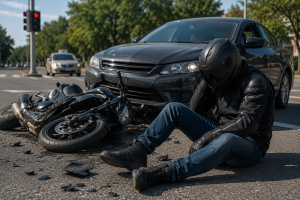
 One of the more nuanced areas of motorcycle accident law involves how riders use their lane and how that positioning gets interpreted after a crash. Motorcycle riders are entitled to the full use of their lane under Massachusetts law, just like any other vehicle. But in the real world of insurance claims and litigation, how a rider was positioned in traffic before an accident becomes a point of scrutiny that car accident victims rarely face. Understanding this before an accident happens, or immediately after one, can significantly affect the outcome of a personal injury claim. A Plymouth personal injury attorney who handles motorcycle cases knows how these arguments play out and how to address them.
The Lane Use Basics Under Massachusetts Law
In Massachusetts, motorcycles are legal vehicles with full lane rights. A motorcyclist is entitled to use the entire width of a travel lane, not just a portion of it. Lane splitting, which means riding between lanes of moving or stopped traffic, is not legal in Massachusetts. Lane filtering, a related practice common in many countries where riders move to the front of stopped traffic at a red light, is also not currently authorized under Massachusetts law.
Within their lane, however, riders can and do position themselves in different parts of the lane for legitimate safety reasons. Riding in the left third of the lane makes you more visible to oncoming drivers. Riding in the right third may help you see around vehicles ahead. Moving within your lane to avoid road debris or a slick spot is reasonable and expected. None of this is illegal, but all of it can be questioned after an accident by someone looking to shift blame.
How Lane Positioning Gets Used Against Riders
Insurance adjusters and defense attorneys representing the driver who hit you may argue that your lane positioning was unusual, unexpected, or contributed to the collision. If you were in the left portion of your lane and a car turned left across your path, they might argue you should have been on the right side. If you were on the right side and a driver merged into you, they might argue a more central position would have been more visible.
These arguments are often not well grounded in traffic safety research. Studies on motorcycle visibility and collision dynamics generally support the idea that lane positioning is a rider’s legitimate safety decision and that drivers have an independent duty to see and avoid motorcycles regardless of where exactly within the lane the rider is located. But these arguments still get raised, and without someone in your corner who can address them with evidence and expert testimony, they can influence how adjusters value the claim.
A personal injury lawyer in Plymouth who regularly handles motorcycle cases will often work with accident reconstruction experts and motorcycle safety professionals who can speak to appropriate lane use and counter the suggestion that a rider’s positioning contributed to their own injuries.
The Intersection Danger Zone
The most common scenario in motorcycle versus car accidents is the left-turn crash. A driver approaching or at an intersection fails to yield to an oncoming motorcycle and turns left directly into the rider’s path. This crash type accounts for a disproportionate number of serious motorcycle injuries and fatalities nationally. Drivers frequently report that they “did not see” the motorcycle, and research into this phenomenon has identified it as a genuine perceptual issue related to how the human visual system processes smaller, narrower objects in traffic.
Not seeing a motorcycle is not a legal defense. Drivers have a duty to look properly and to yield to oncoming traffic before making a left turn. But the “I didn’t see them” explanation can influence how an adjuster perceives fault, particularly if it is presented sympathetically. Part of what a Plymouth personal injury attorney does in these cases is make sure the legal duty of the driver to look and yield is front and center, rather than allowing the focus to drift to questions about what the rider could have done differently.
Protective Gear and Its Role in Plymouth Motorcycle Cases
Massachusetts requires motorcycle riders to wear helmets that meet state safety standards. Beyond the helmet, protective gear like jackets, gloves, pants, and boots is not legally required for adults. In a personal injury claim, whether a rider was wearing additional protective gear can sometimes come up, particularly if the injuries include road rash or limb injuries that protective clothing might have reduced.
This is a more complicated legal argument than it sounds. The at-fault party caused the accident. Their negligence is what put the rider in harm’s way. Arguments that the rider should have been wearing more clothing attempt to shift responsibility in a way that courts in Massachusetts have been skeptical of. Your attorney can address this directly and keep the focus on the driver’s failure to operate safely.
After a Motorcycle Accident in Plymouth: The First Steps
If you are physically able after a motorcycle accident in Plymouth, document the scene thoroughly. Photograph the position of both vehicles before they are moved if possible. Get contact information for witnesses. Do not give a recorded statement to any insurance company before you have spoken to a Plymouth personal injury attorney.
The investigation of a motorcycle accident requires prompt action. Physical evidence disappears. Witnesses become harder to reach. The other driver’s account, which often blames the rider regardless of what actually happened, becomes the dominant narrative if there is nothing to challenge it early. A personal injury lawyer in Plymouth can get involved quickly, secure the evidence, and build the narrative that reflects what actually happened on that road.
Motorcycle riders in Plymouth deserve the same full and fair access to the legal system that any other accident victim has. The bias exists, but it is not insurmountable. The right attorney makes the difference.