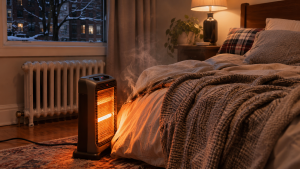
 Imagine a second floor apartment on a January night. The landlord’s radiator has been weak for weeks, so the tenant, whom we will call Dee, plugs a small electric heater in beside her bed and pulls the blanket up. She falls asleep. Sometime after two in the morning the blanket drifts, the smell of smoke wakes her, and what happens in the next ninety seconds will shape her health for years. Dee is invented, but cases like hers are the reason a New Bedford space heater fire lawyer gets calls in the coldest months. Her story is a good way to see how the numbers, the safety rules and the legal questions fit together.
What the national numbers say about nights like Dee’s
The U.S. Fire Administration keeps statistics on home heating fires. Its page on heating fire safety says heating ranked second among causes of home fires in 2021, and fire departments across the country responded to about 32,200 of them. Those fires were tied to an estimated 190 deaths, 625 injuries and $442 million in property damage. The same page notes that the long run trend has been downward since the early 1980s.
These are figures for the whole country and for all kinds of heating equipment, so they say nothing specific about New Bedford. They simply show how large the problem is.
The detail about small heaters that stops people short
Here is the statistic that tends to change minds. For the years 2017 through 2019, the agency reports that portable heaters were behind just 3 percent of home heating fires, but 41 percent of the heating fires that killed someone. Put another way, a small heater is rarely the source of a fire, yet when it is, the outcome is much more likely to be fatal. That is why Dee’s situation, with a heater beside a bed and a person asleep, is the kind fire officials worry about most.
What fire officials ask people to do
The advice on that page is brief. Leave about three feet of open space between anything flammable and every source of heat, including radiators, fireplaces, wood stoves, candles and portable heaters. Do not heat a home with the oven. Switch portable heaters off when you leave the room or go to sleep. Have heating equipment and chimneys inspected and cleaned each year by a professional.
Look at Dee’s room against that list. A blanket was within reach of the heater, the heater stayed on while she slept, and nothing in the room gave her three feet of clearance. In a real claim, an insurer would raise exactly those points. They might matter, but they would not settle the question of who is responsible.
The first question: was the heater itself at fault?
Suppose the heater did not shut off when it overheated, or its cord ran hot, or it tipped and kept running. A defect like that can support a product liability claim against the maker or the seller. If you are hurt, keep the heater in the condition it was left, along with the cord, packaging, manual and receipt. Do not repair it or let anyone throw it out, because an expert may need to examine it before anything can be said about a defect.
The second question: why was a portable heater needed at all?
Dee used a space heater because the building’s heat was failing. If the owner knew and did nothing, the weak radiator becomes part of the story. The same is true of wiring that could not handle the load of extra appliances. Save every text, email and letter about the heat, including the dates of each complaint and any reply. The record of what the owner knew can be as important as the fire itself.
The third question: was anyone else involved?
Fires are not always one person’s doing. An electrician who left a faulty outlet, a neighboring unit where a fire began, or a contractor who disturbed the wiring may all be part of the picture. A New Bedford space heater fire lawyer will want to know about each of these before choosing a theory, because early guesses can narrow the options.
What investigators and insurers will do
After a fire, the fire department generally looks into the cause, and insurance companies may send their own experts. Their conclusions can influence every claim that follows. Ask the department for the incident number and for the report once it is ready. If it is safe to do so, photograph the scene before anything is moved, cleaned or thrown out.
Be cautious about recorded statements. A passing remark such as “I think I left it on” can be treated as an admission. You are entitled to ask for time, and for advice, before you answer questions.
Recording the harm
Burns and smoke injuries can require long treatment, and the whole picture is rarely clear in the first days. Keep every medical record and bill, take dated photos as wounds heal, and write down how daily life has changed, including sleep, work and ordinary tasks. If belongings were lost, list them with photos or receipts, but never put off medical care to do so. Shared fault is judged under the comparative negligence rule in G.L. c. 231, section 85, so a person who shares some blame may still recover a reduced amount, while a person found more than half responsible cannot.
Before the next cold snap
Walk through your home and measure the space around each heater. Test the smoke alarms. Call older relatives and ask how they stay warm. If you rent and the heat is unreliable, report it in writing so there is a record.
Getting advice
If you or someone close to you was hurt in a heater fire, a free consultation can explain which claims may exist and which evidence needs to be saved right away. Bring the incident number, medical records and any photographs, and ask before anyone disposes of the heater.