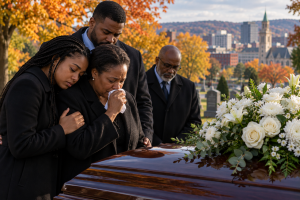
 Nobody brings it up at the funeral. Nobody mentions it at the gathering afterward, between the casseroles and the condolence cards. In the first days and weeks after losing someone in a preventable accident, the focus is entirely where it should be: on grief, on the people around you, on getting through each day.
But somewhere around the third or fourth week, when the relatives have gone home and the casseroles are finished and the house gets quiet, a different kind of weight starts to settle in. The medical bills from the hospital arrive. The paycheck that was supposed to come in does not. The mortgage is still due. And someone, maybe you, maybe a sibling, maybe a spouse lying awake at night, starts asking a question that feels wrong to ask out loud so soon: is there anything that can be done about this legally?
That question is not wrong. It is not disrespectful to the person you lost. It is a completely legitimate response to a situation that should never have happened, caused by someone whose negligence is responsible for every single consequence your family is now living with.
Why Families Wait, and Why Waiting Costs Them
The most common pattern that Worcester personal injury attorneys see in wrongful death cases is this: the family spends weeks or months in a state of emotional paralysis around the legal question. They feel that pursuing a claim is somehow mercenary, that putting a dollar figure on a person’s life cheapens the loss. They worry about what other people will think. They tell themselves they will deal with it eventually, when things feel more settled.
What they do not realize is that on the other side of the equation, things are moving quickly and deliberately. The insurance company representing the person or entity responsible for their loved one’s death typically begins its internal investigation almost immediately after the accident. Adjusters are assigned. Evidence is documented from the insurer’s perspective. Statements are taken. Legal strategies are developed. The insurer is not waiting for the family to feel ready. It is building the framework of its defense from day one.
Evidence that might help a family’s case does not wait either. Surveillance footage has a short lifespan before it gets recorded over. Witnesses are most reliable when the event is recent. Physical evidence at the scene of an accident gets cleared, repaired, or altered. Every week that passes without a family having legal representation is a week during which the evidentiary foundation of their potential case quietly erodes.
A personal injury lawyer in Worcester who handles wrongful death cases can begin preserving that evidence immediately, even while the family is still in the earliest stages of grief. Getting legal help early does not mean rushing into anything. It means having someone protect your options while you take the time you need.
What the Financial Reality Actually Looks Like
The families who reach out to a Worcester personal injury attorney a few weeks or months after losing someone to a preventable accident are often dealing with a layered financial crisis that has been building silently since the day of the accident.
There are the immediate costs: the funeral and burial, which regularly run between ten and twenty thousand dollars or more in Massachusetts. There are the medical expenses from whatever treatment was provided between the accident and the death, which in serious accident cases involving hospitalization and emergency intervention can reach six figures. And then there is the ongoing economic hole: the income the deceased was providing to the household, the childcare they were handling, the mortgage they were helping to pay, the retirement they were building toward.
Massachusetts wrongful death law is designed to address all of these losses. A claim can seek compensation for the financial support the deceased would have provided over the remainder of their working life, calculated with the help of economic experts. It can seek recovery for the funeral costs the family has already paid. It can pursue what the law calls loss of consortium, which is the legal term for something that cannot really be reduced to a dollar figure but that the law nonetheless tries to acknowledge: the loss of the person’s companionship, guidance, and presence in the lives of the people who loved them.
In cases where the deceased experienced pain and suffering between the accident and their death, a related claim called a survival action can be filed alongside the wrongful death claim to address that as well.
The Conversation You Have With an Attorney Is Not a Commitment
One of the things that holds families back from picking up the phone is the assumption that calling a lawyer means they have decided to sue, that they are starting something they cannot take back, that they are making a public declaration of intent that will somehow define how people see them or how they see themselves.
That is not what an initial consultation is. It is a private conversation. It is confidential. Nothing you say to a personal injury lawyer in Worcester during a consultation can be used against you, shared with the other side, or committed to paper without your consent. You are allowed to ask every question you have, learn everything there is to know about what your options look like, and then decide to do nothing. That is a legitimate outcome of a consultation.
What you will leave that conversation with is information. Information about whether the circumstances of your loss give rise to a viable legal claim. Information about what that claim might realistically be worth. Information about the timeline involved and what the process would look like. And information about the one deadline you absolutely cannot miss.
The Deadline That Does Not Move
Massachusetts law gives families three years from the date of their loved one’s death to file a wrongful death lawsuit. That period sounds generous until you consider that the first year is often consumed almost entirely by grief and practical survival. The second year is when financial pressure typically peaks. By the third year, families who have not yet sought legal help are suddenly up against a wall with less time to build a case than the situation deserves.
Missing that deadline is almost always fatal to the claim. Courts rarely make exceptions. The negligent party walks away without legal accountability, and the family absorbs the financial consequences permanently. The three years begin running from the date of death regardless of when the family feels ready to think about it.
This is the single most practical reason to at least have the conversation with a Worcester personal injury attorney sooner rather than later. Not to commit to anything. Not to rush through grief. Just to know where you stand and how much time you have to make a considered decision.
Asking the Question Is Not Betraying Anyone
The person you lost did not want to leave your family in financial hardship. They did not choose what happened to them. And the person or company whose negligence caused it has not volunteered to make things right. The legal system exists precisely because the alternative, a world where the consequences of preventable harm fall entirely on the people who suffered it, is not the world Massachusetts law was written to create.
Asking the question is not mercenary. It is not premature. It is not disloyal to the memory of someone you loved. It is a recognition that accountability matters, that your family’s financial stability matters, and that the law provides a path toward both.
When you are ready to ask it out loud, a personal injury lawyer in Worcester will be ready to answer it honestly.