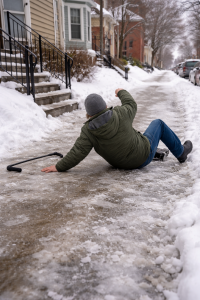
 If you slipped and fell because a neighbor failed to take care of their property in New Bedford, you may be able to hold them responsible. But you cannot rely on the fact that you were hurt alone. You must show why the fall happened and how the property owner’s neglect caused it.
Slip and fall cases come down to evidence. Insurance companies look for reasons to deny claims. Property owners often argue that the condition was temporary, unavoidable, or your fault. Your job is to show that the danger should have been fixed and was ignored.
This guide explains how to prove that failure step by step, using facts that actually matter in a New Bedford slip and fall case.
What Property Owners Are Required to Do in New Bedford
Property owners in New Bedford have a legal duty to keep their property reasonably safe for people who are allowed to be there. This applies to homeowners, landlords, and businesses.
They are expected to maintain areas such as:
- Sidewalks they control
- Entryways and walkways
- Stairs and handrails
- Driveways and parking areas
- Common areas in rental properties
This duty includes dealing with snow and ice within a reasonable amount of time after a storm ends. It also includes fixing hazards like broken steps, uneven pavement, loose railings, and poor lighting.
When a property owner does not take reasonable steps to fix or warn about these dangers, that failure may be considered negligence.
A New Bedford slip and fall injury attorney looks at whether the owner acted reasonably under the circumstances, not whether the accident was unavoidable.
What You Actually Have to Prove
To succeed in a slip and fall claim, four things must be shown.
- The property owner had a duty to maintain the area
- They failed to maintain it properly
- That failure caused your fall
- You suffered injuries and financial losses
Every piece of evidence you collect should help prove at least one of these points.
Start With the Condition That Caused the Fall
The most important question in your case is simple. What made you fall?
You need to document the exact condition that caused the accident. This might be untreated ice, packed snow, a broken step, cracked concrete, or a missing handrail.
If you can, take photos or videos as soon as possible. Focus on:
- The hazard itself
- The surrounding area
- The location in relation to the property
Wide photos show where the danger was. Close-up photos show how serious it was.
If you could not document the scene immediately, photos taken later may still help, especially if the condition was not fixed right away.
Show the Property Owner Knew or Should Have Known
You must prove the property owner had notice of the dangerous condition. This is one of the most common issues in slip and fall cases.
There are two ways to show notice.
Actual Notice
Actual notice means the owner knew about the hazard.
This can be shown through:
- Complaints from tenants or neighbors
- Text messages or emails asking for repairs
- Verbal warnings that were ignored
- Previous falls or near falls in the same area
Constructive Notice
Constructive notice means the hazard existed long enough that a reasonable owner should have discovered it.
Examples include:
- The ice that had built up over several days
- Snow that had been walked on and refrozen
- Cracks that were clearly old and deteriorated
- Handrails that were loose or rusted
A personal injury attorney in New Bedford often uses weather records and maintenance history to prove how long the condition existed.
Use New Bedford Snow and Ice Rules
New Bedford has local rules that require property owners to clear snow and ice within a specific time after a storm ends. When an owner ignores those rules, it strengthens your claim.
Your case becomes stronger when you can show:
- When the snowstorm ended
- When your fall happened
- That the area had not been cleared within the required time
An ordinance violation does not automatically mean you win, but it is strong evidence that the property owner failed to act responsibly.
Witnesses Can Make a Big Difference
Witnesses help confirm that the hazard existed and was not sudden or unavoidable.
Good witnesses include:
- Neighbors who walk past the area regularly
- Tenants living on the property
- Mail carriers or delivery drivers
- Anyone who saw you fall
Witnesses can confirm how long the condition was there and whether anyone tried to fix it. Get names and contact information as soon as possible. Memories fade quickly.
Medical Records Matter More Than You Think
You must show that the fall caused real injuries.
Seek medical care as soon as possible. Be clear with your provider about where and how you fell. Do not downplay symptoms.
Follow your treatment plan. Attend appointments. Do physical therapy if it is prescribed.
Medical records connect the fall to your injuries. Gaps in treatment give insurers room to argue that your injuries were not serious or were caused by something else.
A New Bedford personal injury lawyer uses these records to show both short-term and long-term impact.
Keep Physical Evidence
Do not throw away the shoes or clothing you wore during the fall.
These items may show:
- Wet or icy residue
- Worn tread
- Tears or damage from impact
Store them safely and do not clean them. They may later support your version of events.
Identify Who Was Responsible for Maintenance
The person who owns the property is not always the person responsible for maintenance.
Responsibility may fall on:
- A landlord
- A property management company
- A contracted snow removal service
Property records, lease agreements, and service contracts help determine who controlled the area where you fell.
A personal injury attorney in New Bedford can obtain these records if they are not publicly available.
Weather Data and Experts Can Strengthen Your Case
Weather reports are objective and difficult to dispute. They can show when snow fell, when temperatures dropped, and how long ice likely remained untreated.
In some cases, experts may be used to explain:
- Proper snow and ice removal practices
- Safety standards for walkways and stairs
- How did the condition cause your injuries
This type of evidence is often used when insurers argue the hazard was unavoidable.
Document Your Losses Carefully
You are entitled to compensation only for losses you can prove.
This may include:
- Medical bills
- Lost wages
- Reduced ability to work
- Pain and physical limitations
- Ongoing or permanent effects
Keep pay stubs, employer letters, and medical invoices. Clear documentation makes settlement discussions more productive.
Expect the Property Owner to Push Back
Most defendants argue one or more of the following:
- They did not know about the hazard
- The condition was obvious
- The weather made it unavoidable
- You were not paying attention
Massachusetts uses comparative negligence rules. You may still recover compensation if you were partly at fault, as long as you were not more than 50 percent responsible.
A new Bedford slip and fall injury attorney works to limit any blame placed on you.
Why Local Experience Helps
Slip and fall cases are affected by local factors.
- City ordinances
- Court practices
- Weather patterns
- Common property layouts
A personal injury attorney in New Bedford understands how these cases are handled locally and how insurers evaluate claims from this area.
That experience matters.
When to Talk to a Lawyer
There are deadlines for filing personal injury claims in Massachusetts. Waiting too long can end your case before it begins.
Early legal help protects evidence, handles insurer communication, and puts you in a stronger position from the start.
Final Thoughts
Slip and fall cases are not about exaggeration or blame. They are about showing that a dangerous condition existed and that it should have been addressed.
If your neighbor failed to maintain their property and that failure caused your injuries, you have the right to pursue compensation.
Clear facts, solid evidence, and guidance from a qualified personal injury attorney in New Bedford give you the best chance of a fair outcome.