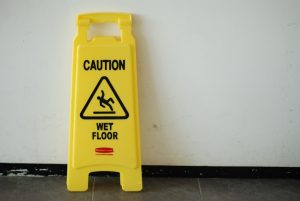
 Both indoor and outdoor slip and fall injuries can be cause by a number of things such as:
- Wet surfaces
- Inadequate lighting
- Cracked sidewalks or pavements
- Worn stairways
- Torn carpets
- Wax or polished floors
- Unfilled holes
However, which factors should you consider for you to know if you have a slip and fall case?
Elements of a Slip and Fall Case
Slip and fall cases involve what is known as premises liability. By definition, premises liability assumes the owner of a property is illegally responsible for accidents that were caused by a dangerous condition that they knew or should have been aware that it existed. You have to show premise liability by showing:
Duty. The property owner owed you duty of care by ensuring the premise was safe. For instance, it’s a shop owner’s legal duty to ensure the floor is not slippery for all customers that walk in.
Breach of duty. The property owner violated their duty by not ensuring that the property was safe. For instance, the shop owner did not put up signs to wan customers that the floor was slippery or they did not inspect the premises to ensure the floors were not slippery.
Causation. The injury you suffered was a direct result of the property owner’s breach of duty.
Damages. You must have suffered a physical injury or a legally recognized harm. You can seek compensation for your medical expenses, lost wages among other benefits, depending on the seriousness of your injuries.
Important Considerations
If your injuries were the result of your own clumsiness or there was no foreseeable result of the property owner’s breach of duty, then you might not have a case.
Or instance, if you tripped down a flight of stairs because you were carrying too many bags that obstructed your view, then you cannot file a slip and fall injury claim.
Secondly, if a cleaner accidentally knocks over a bucket full of soapy water and you slip and fall on the wet floor, then the property owner will not be held liable because this isn’t a foreseeable result of the property owner’s breach of duty of care.
Additionally, if you slipped and fell on federal, city or state property, the process for filling a claim will be different. If you file a claim after the statute of limitations has expired then your claim might be barred.
Find out why no one wants to take your case.
How Much is Your Slip and Fall Case Really Worth?
Now that you’ve managed to prove liability, it’s time to assess how much your case is worth. You will need the help of a sip and fall attorney to help you calculate exactly how much you deserve in compensation. This is because if you do not have any prior experience handling a slip and fall case, you might quote a much lower monetary figure that won’t cover your medical expenses let alone damage to your property.
In addition, you might not include some damages such as lost wages, pain and suffering, etc. keep in mind that some injuries appear much later, meaning that you need to negotiate with future injuries in mind.
Another factor to consider is the insurance company may deny your claim if they:
- Suspect you’re exaggerating your injuries
- Feel your medical expenses are too high
- Suspect you had a previous injury in the exact same place that you claim to have injured in the accident.
Why You Should Get Legal Help with Your Slip and Fall Claim
Proving liability can be a complex process especially if more than one party is involved. Moreover, if your injuries are severe, you need to rest and recover rather than pursue a slip and fall injury claim.
When you hire a slip and fall injury lawyer, they will gather all the evidence needed including hiring an expert witness who can testify to prove the severity of your injuries. This is just in case an insurer decides to deny your claim on suspicion that you are exaggerating your injuries.
A lawyer can also explain to you your legal options. Remember that not all slip and fall cases are the same.
If you are in Hyannis, MA, you can contact us today at 508-775-1660 and get your claim reviewed for free. We offer free initial consultations for all cases.