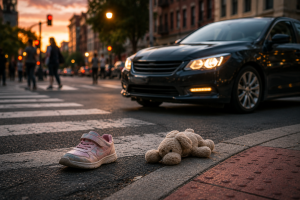
 In 2022, a five-year-old girl was struck and killed by a speeding driver in a Worcester crosswalk. It was one of several high-profile pedestrian deaths in Massachusetts that year that pushed the state’s pedestrian fatality total to 100, a 35% increase from the year before. The intersection where she was hit was not an obscure, poorly lit back road. It was a marked crosswalk. She was exactly where she was supposed to be.
That tragedy put Worcester on a national map it never wanted to be on, and it raised questions that the community is still grappling with. Why do pedestrians keep getting hit in crosswalks? Who is accountable when they do? And what can families do when someone they love is hurt or killed because a driver was not paying attention?
If you or someone in your family has been injured in a pedestrian accident in Worcester, a pedestrian accident lawyer in Worcester can help you understand your legal rights and what you can realistically recover.
Pedestrian Deaths in Massachusetts: A Stubborn Problem
Massachusetts recorded 78 pedestrian fatalities in 2024, according to state traffic data. That figure represents more than 21% of all traffic deaths in the Commonwealth, a rate that exceeds the national average. Adults 65 and older account for over 37% of those deaths, reflecting the particular vulnerability of older pedestrians who may move more slowly, have reduced vision, or rely on crosswalks and accessible routes that are supposed to be safe.
According to the Massachusetts Department of Public Health, 119 pedestrians died in the state in 2022, generating over 500 hospitalizations and nearly 2,600 emergency department visits from pedestrian-related injuries. The hospital costs alone for non-fatal pedestrian injuries in that single year totaled $70 million statewide. These are not minor incidents.
Motor vehicle collisions account for 88% of pedestrian deaths in Massachusetts, with the majority involving being struck by a car, pickup truck, or van. The time between 5 PM and 10 PM is disproportionately dangerous for pedestrians, when lower visibility and post-work traffic combine in ways that prove fatal too often.
Where Worcester Pedestrians Face the Greatest Risk
Worcester’s downtown area, its college zones, and its densely populated neighborhoods all present pedestrian risk that varies by street and by time of day. Drivers turning right at intersections without yielding to pedestrians in the crosswalk is one of the most common causes of pedestrian strikes. Drivers who fail to yield when making left turns account for another significant portion. Distracted driving and speeding are the underlying factors in the majority of cases where a driver hits someone on foot.
I-290 underpasses and areas where pedestrian access requires crossing high-speed traffic without adequate infrastructure also create risk. Streets with high commercial activity, restaurants, and summer foot traffic from downtown events add more opportunities for the kind of momentary driver inattention that turns fatal.
What Makes a Pedestrian Accident Case
When a driver strikes a pedestrian, the legal question centers on negligence. Was the driver doing something they should not have been doing, or failing to do something they were legally required to do? In most pedestrian accident cases, the answer is yes. Speeding, distracted driving, failure to yield at a crosswalk, running a red light, or driving while impaired are all forms of negligence that create liability when they cause harm.
Massachusetts is a modified comparative negligence state. That means that if a pedestrian bears some partial responsibility for the accident, their compensation may be reduced proportionally. But as long as the pedestrian was not more than 50% at fault, they can still recover. And in the vast majority of pedestrian-vehicle collisions, the fault lies overwhelmingly with the driver.
A pedestrian accident lawyer in Worcester will investigate the crash thoroughly, including any available surveillance footage, witness accounts, police reports, and, where applicable, the driver’s phone records to establish whether distraction played a role. These cases can move quickly, and gathering evidence early is critical.
What Compensation Can a Pedestrian Accident Victim Pursue?
The range of damages in a pedestrian accident case reflects the severity of these injuries. Pedestrians hit by cars often suffer broken bones, hip fractures, spinal injuries, traumatic brain injuries, and internal organ damage. Surgery, hospitalization, and extended rehabilitation are common. In fatal cases, families face the additional layer of grief on top of financial devastation.
Compensation in a pedestrian accident claim can include current and future medical expenses, lost wages and lost earning capacity, pain and suffering, emotional distress, and in wrongful death cases, funeral expenses and compensation for the financial and emotional loss the family has suffered. Massachusetts does not cap damages in most personal injury cases, which means the compensation available can be substantial when the injuries and negligence are serious.
Summer Means More Pedestrians, More Risk
More people walk in summer. More events bring foot traffic to Worcester’s downtown. More families are out on weekends. More children are outside. That is all good. But it also means more interactions between pedestrians and vehicles, and more opportunities for a distracted or careless driver to hurt someone.
If this summer has already brought a pedestrian accident into your family’s life, please know that you do not have to navigate what comes next alone. A pedestrian accident lawyer in Worcester can meet with you, evaluate your situation, and explain what your options look like. Most personal injury attorneys offer free initial consultations and work on a contingency basis, meaning you pay nothing unless they recover compensation for you.
The driver who hit you had a responsibility to keep you safe. When they failed that responsibility, the law created a pathway for accountability. Let a Worcester personal injury attorney help you walk that path.