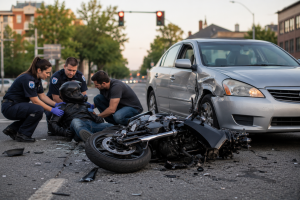
 Ask any motorcyclist who has ridden for more than a few years, and they will tell you about the left-turn crash. It is so common in the riding community that experienced riders anticipate it at every intersection. A car coming the other direction, the driver misjudges the speed of the oncoming motorcycle or simply does not see it at all, and turns left directly into its path.
It is the single most common way motorcyclists get seriously hurt or killed. It is almost always the car driver’s fault. And it is still happening constantly on Worcester roads this summer.
Understanding why it keeps happening, and what your legal options are if it happens to you, matters if you ride anywhere in Central Massachusetts.
Why Drivers Keep Not Seeing Motorcycles
The “I never saw them” explanation that drivers give after hitting a motorcyclist is not always a lie. There is a real perceptual phenomenon at work called inattentional blindness, where the brain fails to register things it is not actively looking for. Drivers scan intersections for cars. Their visual system is calibrated to detect the size, speed, and profile of other passenger vehicles. A motorcycle, being narrower and presenting a different visual signature than a car, can genuinely fail to register even when it is in plain sight.
This does not make it legally excusable. Drivers have an obligation to share the road with motorcycles, and that obligation includes developing the awareness to look for them. In Massachusetts, a driver who turns left in front of an oncoming motorcycle and causes a crash is almost always going to be found at fault, because the duty to yield to oncoming traffic is clear.
But the perceptual issue explains why this keeps happening even when drivers are not texting or drunk. It is a genuine failure of observation, and it is one reason motorcyclists are so vulnerable at intersections.
Worcester Intersections Where This Happens Most
Certain kinds of intersections create more left-turn crash risk than others. Multi-lane roads where a motorcycle might be partially obscured by another vehicle are particularly dangerous. So are intersections with inadequate sight lines, high traffic volume, or short signal cycles that pressure drivers into making quick judgment calls about gaps in oncoming traffic.
Routes 9 and 20, the intersection-heavy sections of Main Street, and the various commercial strips in Worcester where traffic is dense and turning movements are constant all create conditions where left-turn crashes occur. If you ride in Worcester regularly, you already know which intersections feel most dangerous. The legal record reflects those instincts.
What Happens When the Driver Claims You Were Speeding
The most common defense move in a left-turn motorcycle crash case is the speed argument. The driver’s insurance company argues that while their driver may have turned, the motorcyclist was traveling above the speed limit, which contributed to the crash by reducing the time the driver had to complete the turn safely.
This argument has two goals. First, it tries to put some of the fault on the motorcyclist, which under Massachusetts comparative fault rules would reduce the compensation they can receive. Second, it plays into existing stereotypes about motorcyclists being reckless, which can influence how adjusters, mediators, and juries perceive the case.
A Worcester personal injury attorney who handles motorcycle cases knows this argument is coming and prepares for it. Accident reconstruction, dashcam footage from other vehicles, traffic camera footage, and witness accounts can all help establish the motorcycle’s actual speed. In many of these cases, the evidence shows the rider was traveling at or near the speed limit, and the driver turned anyway because they misjudged the distance or simply did not look carefully enough.
The Serious Nature of Left-Turn Crash Injuries
When a car turns left into a motorcycle, the rider typically takes the impact on the front or side of the bike. They are often thrown from the bike, either over the car, alongside it, or into oncoming traffic. The injuries that result are frequently catastrophic: broken femurs, pelvic fractures, shoulder separations, traumatic brain injuries even with helmets, road rash covering large portions of the body, and internal organ damage.
Recovery from these injuries is long, painful, and expensive. Medical bills for a serious left-turn crash can reach six figures quickly. Lost wages accumulate during months of recovery. And in cases involving permanent injury, the long-term costs of ongoing care, reduced earning capacity, and the impact on quality of life make these among the highest-value personal injury claims filed.
That value is also why insurance companies fight these cases hard. A Worcester personal injury attorney who has handled motorcycle accident cases understands both the human reality of what these riders go through and the legal strategy required to recover what they are genuinely owed.
What to Do Immediately After a Left-Turn Crash
If you are hit by a left-turning driver and you are physically able to do anything at all after the crash, call 911 immediately. Get a police report. If there are witnesses, get their contact information before they leave. Take photos of the scene, the vehicles, the road, and any visible injuries.
Do not give a recorded statement to the other driver’s insurance company before speaking with a personal injury lawyer in Worcester. The recorded statement request often comes very quickly after a crash, while you are still dealing with the shock and pain of the injury. That is not the right moment to be making statements that will be used in your case.
Motorcycle crash cases involving serious injuries deserve serious legal representation. A Worcester personal injury attorney who specifically handles motorcycle cases brings experience with the bias issues, the insurance dynamics, and the medical realities that define these claims.