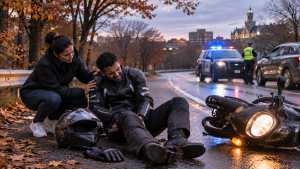
 Anyone who rides in New England knows the feeling of a good November day. The air is crisp, the leaves are down, and traffic has thinned out. You know it won’t last, so you take the bike out one more time.
It’s also the time of year when daylight vanishes early, pavement stays damp, and drivers have stopped expecting motorcycles. If you’ve been hurt in a late-season crash, a Worcester motorcycle accident lawyer can help you sort out what happened and who’s responsible. First, here’s what the published data says.
What NHTSA reports on motorcyclist deaths
NHTSA’s fact sheet “Motorcycles: 2023 Data” reports that 6,335 motorcyclists were killed in U.S. traffic crashes in 2023, which was 15 percent of all traffic fatalities and a 1 percent increase from 2022. Of those killed, 47 percent died on weekends and 39 percent died in the dark. About 35 percent of the riders who died were unhelmeted, based on known helmet use. The rate was 51 percent in states without universal helmet laws and 10 percent in states with them.
Note what the sheet doesn’t say. It doesn’t break out deaths by month, so I can’t tell you how November compares with July from that source. The darkness figure is a reminder, though, that the shorter days of late fall put more riding time after sunset.
Massachusetts requires helmets for everyone on the bike
Under G.L. c. 90, section 7, every person operating a motorcycle or riding as a passenger must wear protective headgear that meets the registrar’s standards, with a narrow exception for certain parade participants. The RMV’s motorcycle manual says the same thing in plain terms: helmet use for riders and passengers is mandatory.
“I didn’t see him” is still the most common line
The RMV manual is surprisingly direct about why crashes happen. It says motor vehicle drivers often cite lack of rider visibility as the leading cause of an accident. It also says a motorcycle with its headlight on becomes about twice as noticeable to oncoming drivers, and advises riders to keep the headlight on at all times. At night, the manual notes that Massachusetts law requires riders to use their headlights from half an hour after sunset.
That’s useful for two reasons. For riders, it’s practical advice. For a claim, it means you should expect the other driver, and their insurer, to say they simply didn’t see you. A strong case answers that with specifics: where the rider was, what the driver could have seen, whether the headlight was on, and whether the driver looked at all.
Cold weather is its own factor
The RMV manual also warns that riding for long periods in cold weather can cause severe chill, fatigue and even hypothermia. It’s one of those things riders know and drivers rarely consider. Fatigue slows reaction time, which can matter in how a crash unfolds. It can also come up in the argument over fault, so it helps to be honest with your lawyer about how long you’d been out and how you were dressed.
What to do if you’re hurt
Medical care comes first, even if the injuries seem manageable. Motorcycle crashes often cause fractures, road rash and head trauma that can worsen over days.
If you can, collect the following before it disappears:
- Photos of the scene, the road surface, your bike and the other vehicle.
- Names and numbers of witnesses.
- The police report number.
- Your helmet and riding gear, kept as they were after the crash. Don’t clean or throw them out.
Keep the bike unrepaired until it has been documented. Mechanical evidence can matter if an insurer questions how the crash happened.
Also write down your own timeline while it’s fresh: where you’d been riding, how long you’d been out, what the road surface looked like and whether you noticed leaves, sand or gravel near the spot. Riders often work out afterward that a small hazard played a part. If a road condition contributed, that can change who may be responsible, and claims involving public roads can come with their own notice requirements, so ask about that early rather than late.
If you were a passenger or part of a group ride
Riding two-up or in a group adds some wrinkles. A passenger who was hurt may have their own claim, separate from the rider’s, and the people involved may have different interests, which is something to talk through with a lawyer rather than assume. Other riders in a group are also potential witnesses, so get their names and numbers before everyone heads home. If someone took photos or video on a helmet camera or phone, ask them to save the originals, since footage can be overwritten or lost when a device is reused.
Shared fault and insurers
Insurers often look for ways to shift some of the blame to the rider. Under G.L. c. 231, section 85, recovery isn’t barred if your negligence was not greater than the total negligence of the party you’re claiming against, but your damages are reduced in proportion to your share.
If you were hurt riding in or around Worcester, talk to a Worcester motorcycle accident lawyer before giving a recorded statement. It’s a lot easier to protect your claim at the start than to repair it later.